A safari in a wild land that feels like 'home' to me
Feb 24, 2026
Hi! We’re Ana and Jon—safari guides with 10 years of experience across Africa. Every Tuesday, we share real adventures from places off-the-beaten-path. Today’s post is about Namibia, a wild and mysterious land, not particularly easy to explore, that has become my second home.
ADVENTURE
“We have to turn back!” Jon’s worried voice announces over the radio. “Hoanib is flooded.”
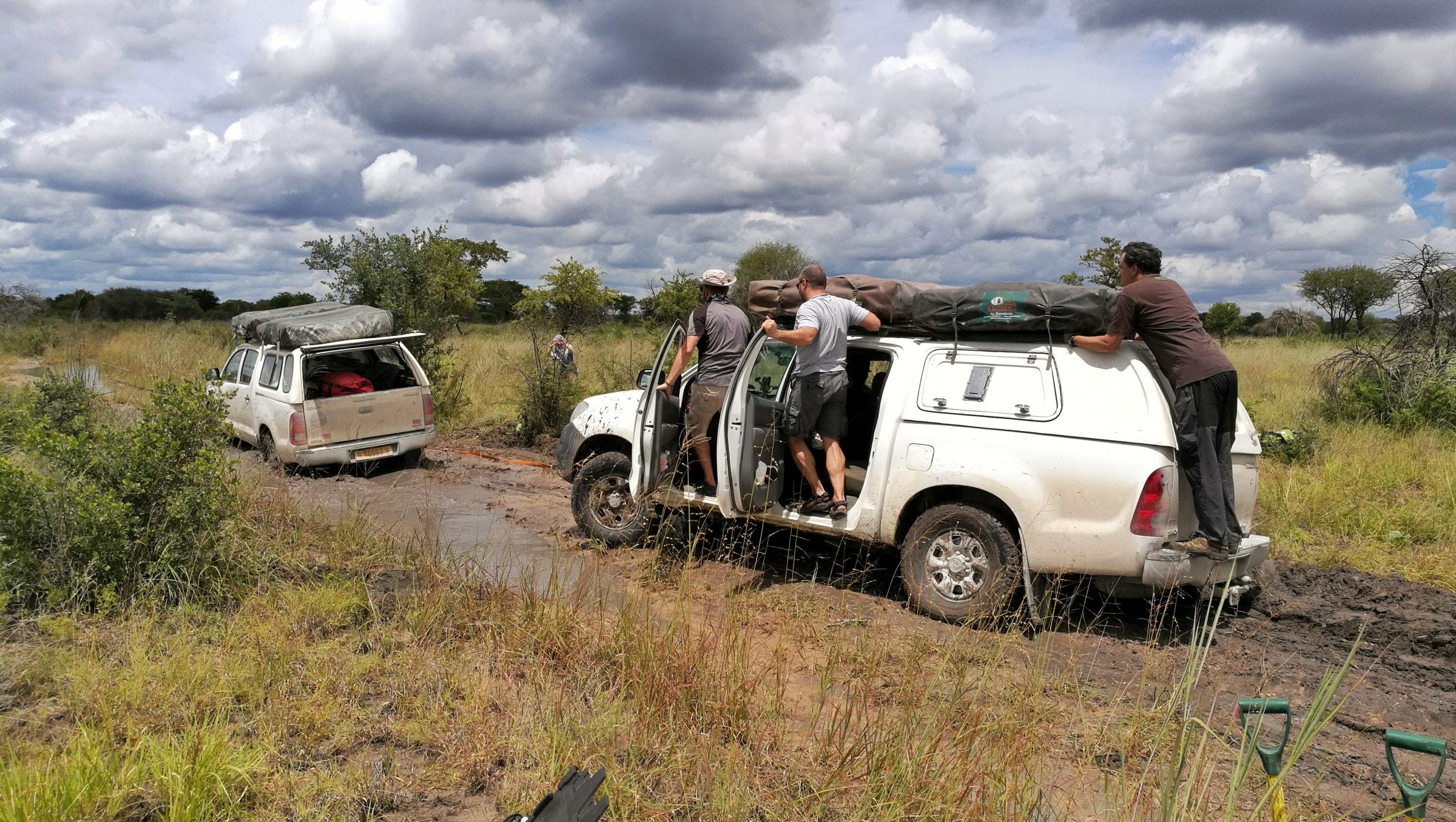
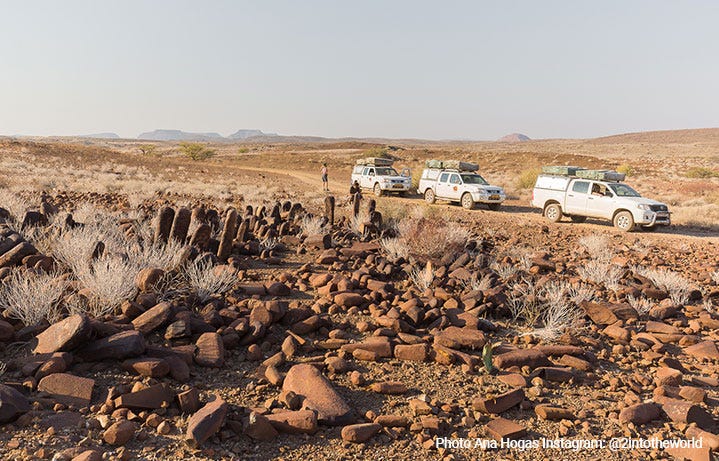
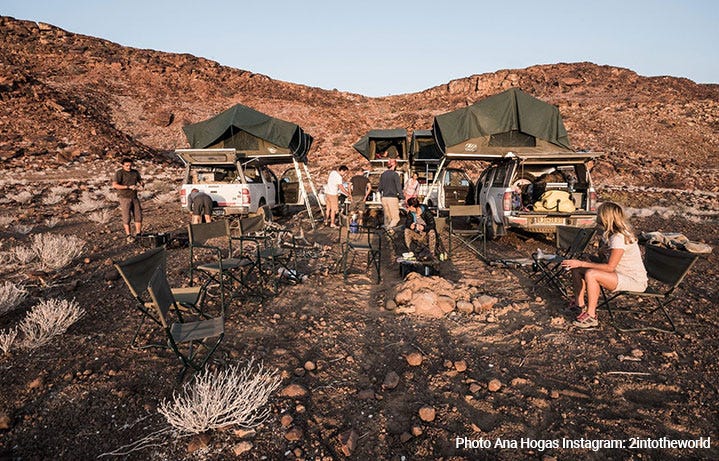
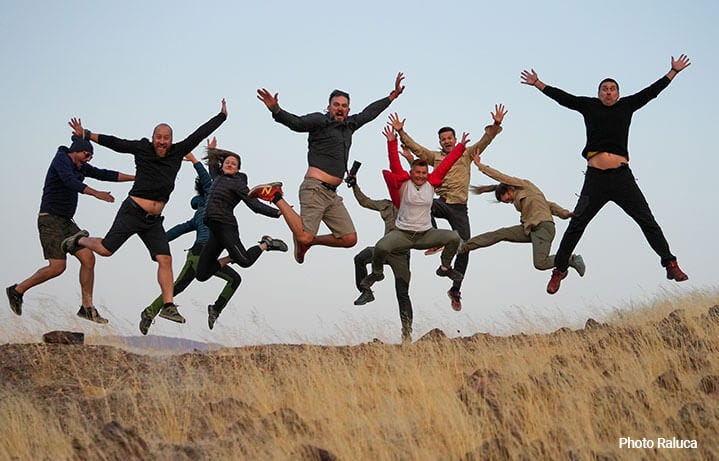
In February, I was in Namibia for the third time, with a convoy of 11 other people and three vehicles, equipped to the rafters with all we might need for an adventure into the wild. But the dry riverbed where we had camped six months earlier was now under water. Hoanib—one of the 12 ephemeral rivers that flood once a decade, or less, forming a ecological system unique to Namibia—was blocking our path north. Our adventure was stuck.
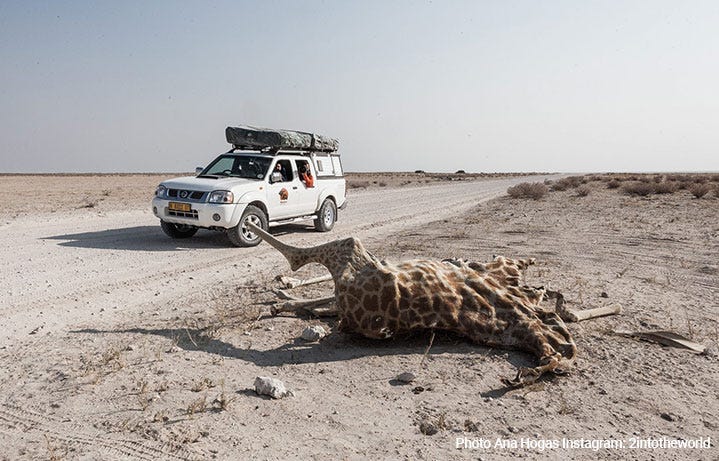
In the driest country south of the Sahara and one of the wildest on the planet, your travel timing truly makes all the difference. Namibia’s climate is as strange and temperamental as its landscape. Daytime temperatures remain stable throughout the year, in winter it never rains, and the nights can feel either hotter than a sauna, or colder than if you slept inside a fridge. The culprits are the Benguela Current, which pushes inland the cold air evaporated over the Atlantic, and the Namib and Kalahari deserts, which border the country to the south and east.
INTO THE WILD
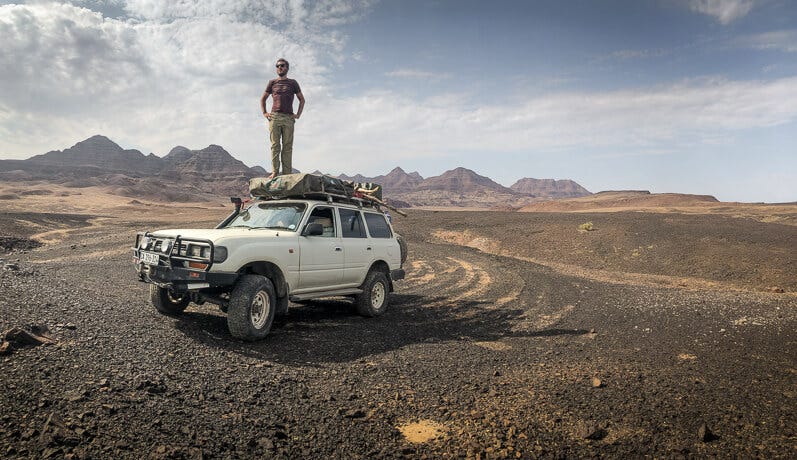
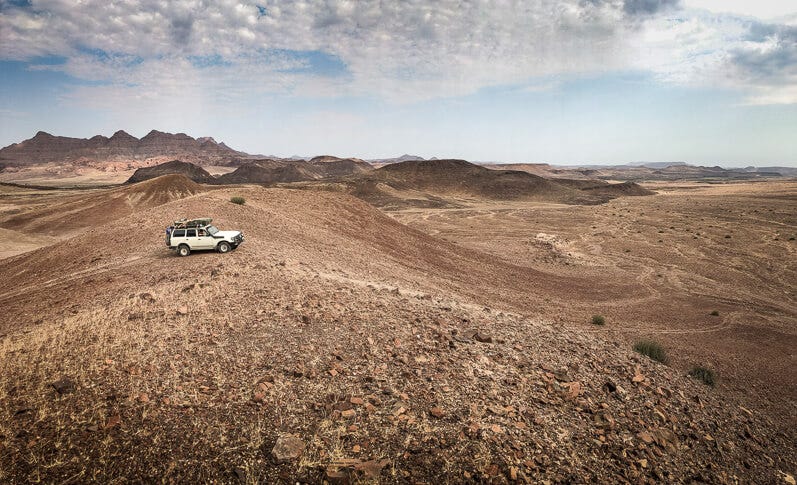
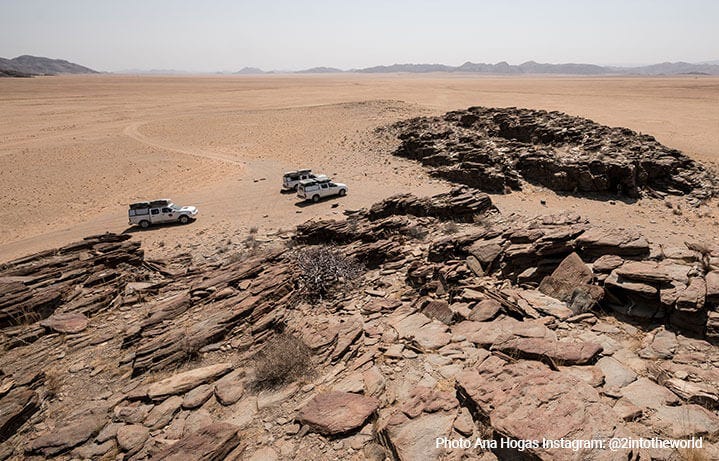
As usual, we return to Namibia in August, when the heart of the country has been drying out for about four months. The Damaraland region is just a few hours’ drive from the city of Windhoek, but the eerie landscapes make us feel like we are on planet Mars. The air is hot as lava. The scarlet sand underfoot, dotted here and there with thorns, acacia scrub, and crusts of salty clay, is like stubbles on an unshaven cheek.
To the west, the granite monoliths of Damaraland come into view, rising along a geological scar—the place where, more than 180 million years ago, the supercontinent Gondwana split in two. Our safari crosses only the African side of that giant land; the rest of Gondwana now lies in South America, forming the eastern coast of Brazil, Argentina, Paraguay, and Uruguay.
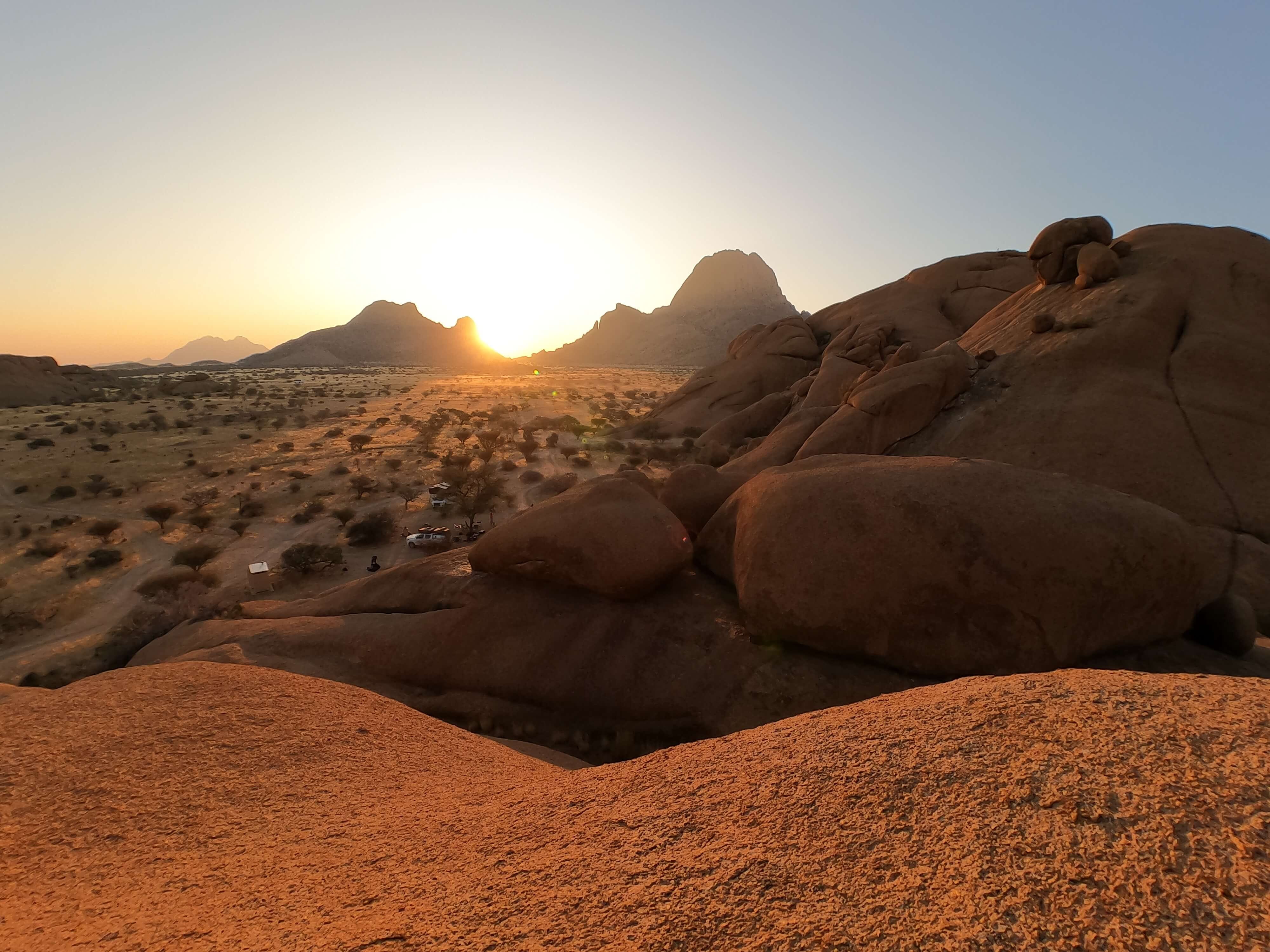
Some of these strange mountains conceal caves adorned with Stone Age rock art. Deep within others lie vast deposits of gold and rare metals. As night falls, we set up camp at the foot of the tallest among them, Spitzkoppe, nicknamed the “Matterhorn of Namibia.”
The campsite at Spitzkoppe is truly spartan. The Damara villagers who live a few kilometres further south have built simple thatched with long-drop toilets and solar-heated showers. Beyond that, nothing recalls urban civilisation. From here on, humans are no longer the dominant species. In Damaraland, we are mere guests.
DRAMATIC LANDSCAPES
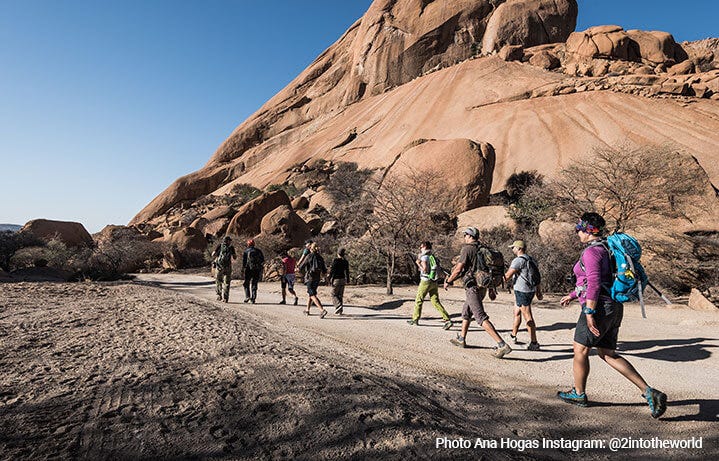
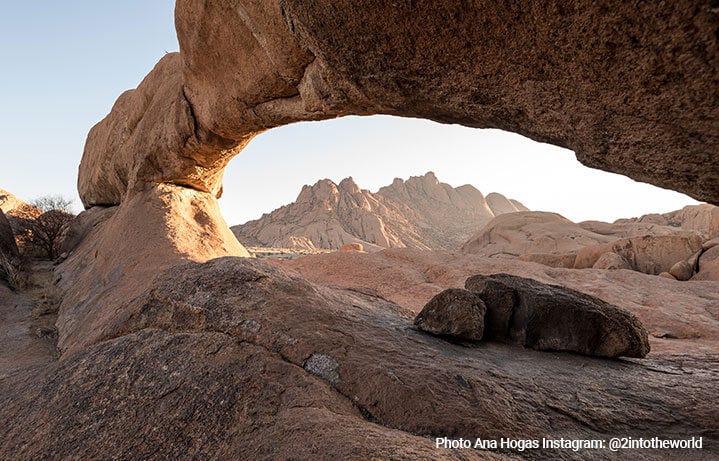
We wake up with the dawn. We have 4 kilometres of marching, on an empty stomach, to the Bushman’s Bridge, where they say the sunrise is spectacular.
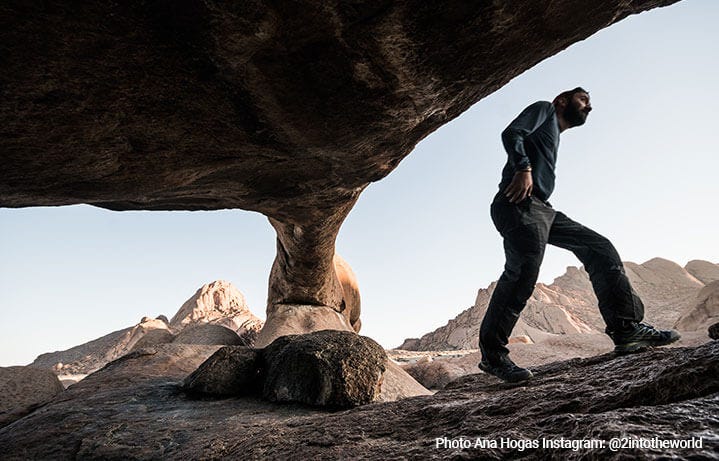
We pass by granite prisms that look as though they were abandoned mid-game by giants. We scramble over house-sized boulders; some balancing, impossibly, on a single ledge, ready to topple at the slightest sneeze of a god. There are sharp shards and smooth stone humps; some fused together, others scored by faults. Spitzkoppe is a landscape in turmoil. Yet none of us will ever hear the explosions of volcanic bombs or the grinding roar of cracking granite. In Damaraland, silence reigns absolute, while the tumult roars on, at a rhythm that is not measured in days, years, or human lifetimes.
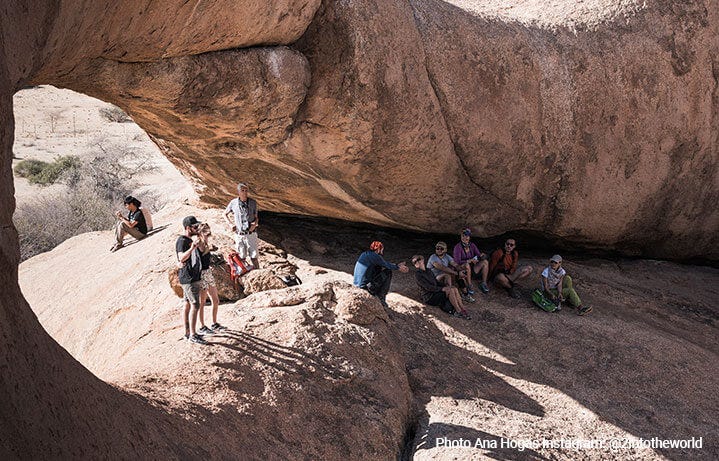
At 6 a.m. the southern winter cold bares its sharp teeth. Bundled in several layers of merino wool, I huddle beneath the Bushman’s Bridge and wonder, what made primitive people believe this granite arch could be a gateway to paradise? But when the first ray of sun hits, I see their point. At 6:05 sharp, the Spitzkoppe plateau is bathed in a light that, for lack of a better word, I will call “divine”. The landscape shape-shift minute by minute.
If yesterday I thought the granite seemed ordinary and grey, now I discover new colours of the Namibian dawn: shimmering shades of magenta, rusty ochres, deep indigos.
We continue our journey north, to spend one more night in the open veld, at the north-western edge of the Etendeka Plateau.
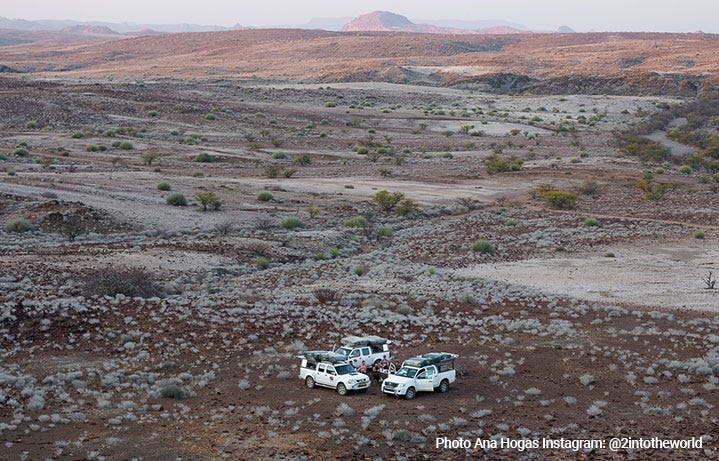
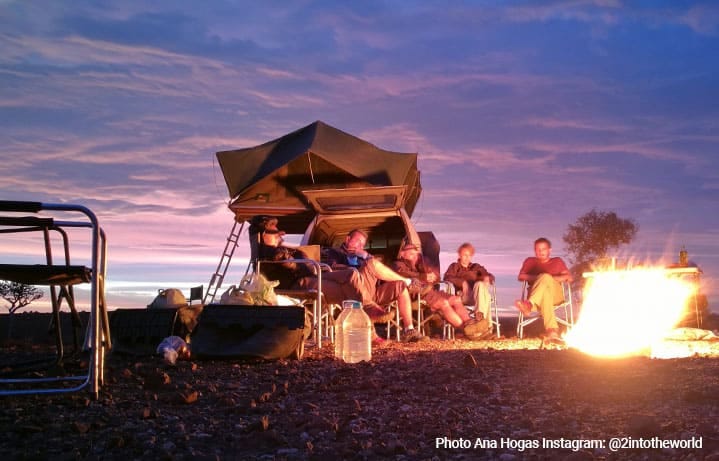
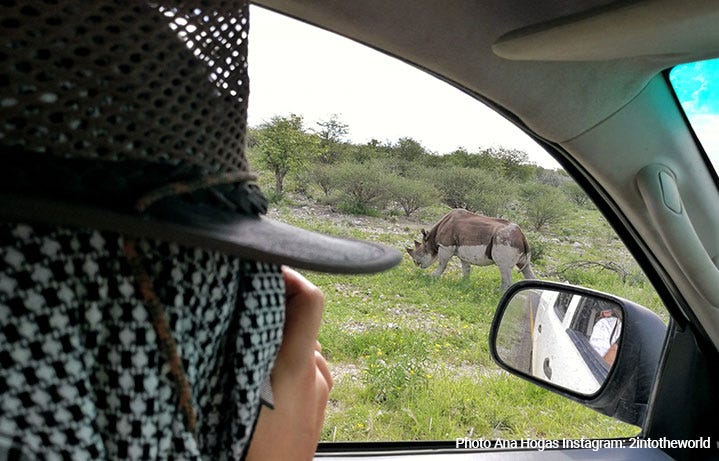
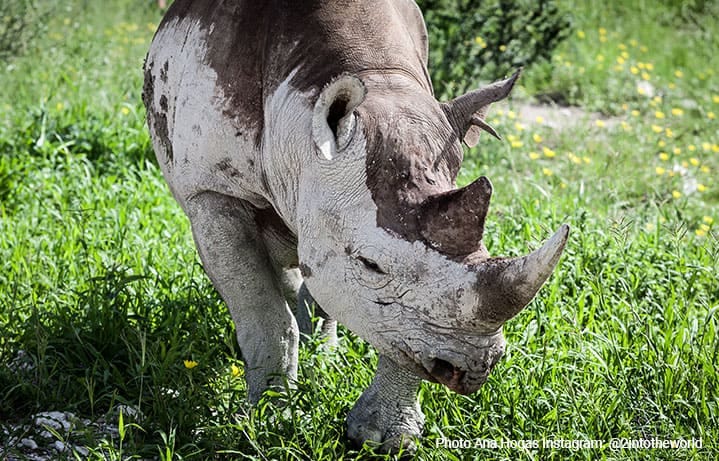
To the left of our bivouac, we have a panoramic view over the lunar landscape of the Palmwag Concession, a renowned sanctuary for black rhinos. To the right lies the Hobatere Concession, patrolled by lions. The hills and valleys blanketed with bushes the size of cars offer them perfect places to hide. As soon as night falls, we gather around the bonefire. Jokes are told, stories are spun. As I gawk into the darkness, I can almost smell the wild creatures hiding around.
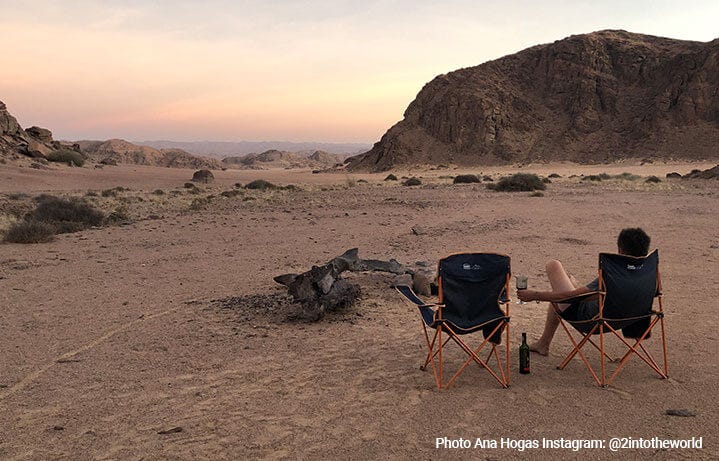
It took me many nights in the bush to learn to savour this solitude that we are no longer able to appreciate, prisoners as we are to our cities of concrete and glass. This is the Africa I love. I wouldn’t trade a single moment of clarity here for something as prosaic as a bed.
Thanks for reading. Subscribe to get the Into The World newsletter in your inbox!
THE GREAT WHITE PLACE
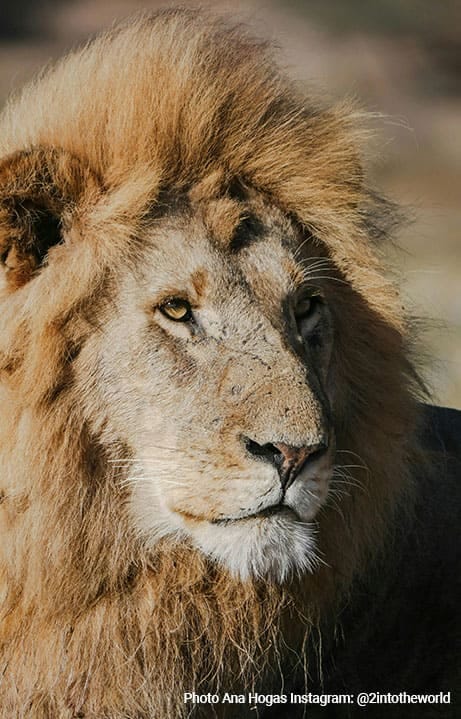
Over morning coffee, beyond the hills we hear the unmistakable uuuuuh-huuum. “It must be a resident from Etosha,” I tell Dana, who’s here for the third time in Namibia; “he’s probably come out of the National Park boundaries to hunt on livestock.” The muffled uuuuuh-huuum repeats a few times, then fades. A good sign.
Did you know that a lion’s roar carries the signature of each individual and can be identified with 91.5% accuracy? Lions can recognise the calls of other individuals, allowing them to locate distant companions and also to avoid potentially hostile neighbours.
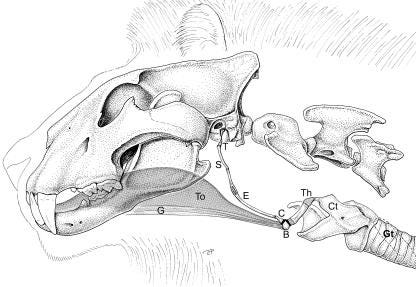
The roar is a result of a unique physiological adaptation. The larynx of lions is not ossified in its place like is the case with other species, so it allows for movement of the suspensorium, a voice-box-like device suspended with cartilage at the top of the windpipe.
Source Londolozi Blog
The hyoid apparatus, larynx and cranial part of the trachea in the lion. G, M. geniohyoideus; To, tongue; T, Tympanohyoideum; S, Stylohyoideum; E, Epihyoideum; C, Ceratohyoideum; B, Basiyoideum; Th, Thyrohyoideum; Ct, Cartilago thyroidea; Gt, Glandula thyroidea .
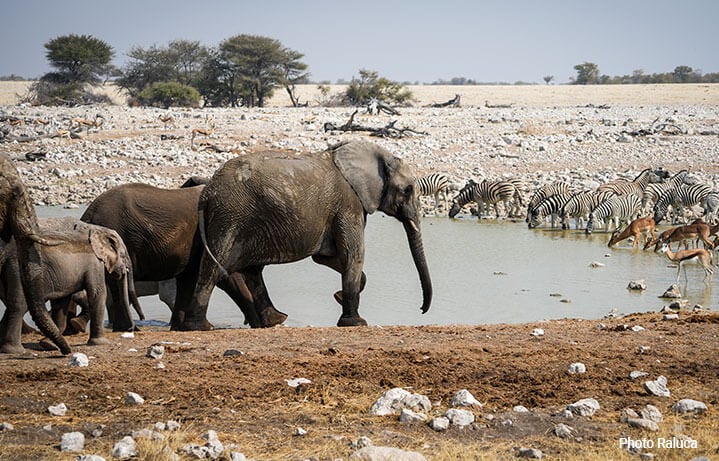
We spend the following days on long game-drives, zig-zagging across the Etosha pn. The Great “White Place”. Etosha is truly one of the most astonishing reserves in the world, with natural waterholes that shelter 114 mammal species, 340 birds, 110 reptiles, and 16 amphibian species. Numbers that take your breath away.
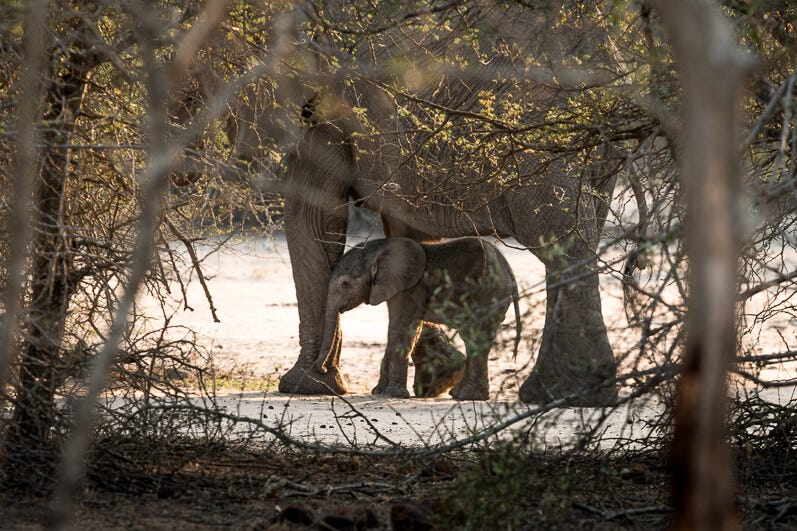
We dream, don’t we, of such places when we speak of Africa. In reality, the enormous herds described in Livingstone’s journals are now a long-gone myth. Over the last century, human agricultural activities, urban development and poaching have reduced the continent’s great national parks to a fraction of their original size. The elephant population have declined by 30% in just seven years, from 2007 to 2014.
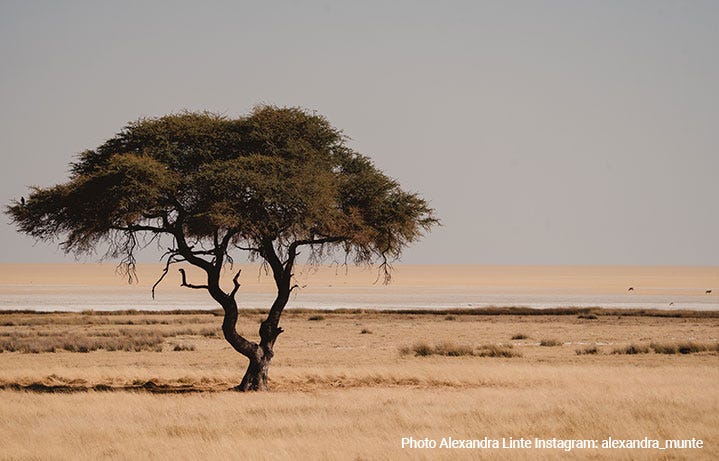
Most safari companies advise that Etosha is visited in winter, when the pan—in fact a 50-million-year-old fossil lake—dries up almost completely, forcing the animals to gather at just a few strategic water points.
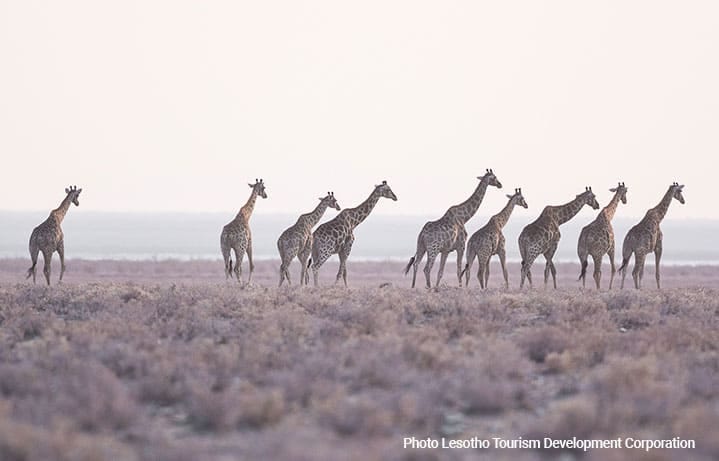
The terrain in the centre of the park is so flat and the vegetation so low and sparse, that you can see for miles around. It’s a mesmerizing world. The running ostriches seem to levitate. On the eastern side of the pan, where makalani palms grow thick, pachyderms drink next to giraffes who nibble on flat-topped acacia canopies. Out on the plains, we see blue wildebeest herds grazing alongside gnus, kudu, oryx, and Burchell’s zebras—all alert at whaever is hiding in the veld. We soon see the predators, a group of young lionesses sitting on a carcass. The springboks pronking past seem to say: “Don’t bother with me—look how high I can jump; imagine how fast I can run!”
Above us glide bare-necked vultures, in the grass we see finches and blue cranes. In the tree beside the lions I spot with my binoculars a pair of African fish eagles—their beaks stained with blood. It’s a rare moment of peace, a break between the hunt and the feast. The laws of survival are brutal in the wild and the competition is fierce, but the players always play a fair game. Each takes only what it needs from the shared “supermarket” of mother nature. The harmony is supreme.
The National Park looks completely different in the wet season. When it rains—and this happens at least once a day—the drama shifts overhead. The sky is freckled with fragments of cumulus, or bruised purple, with wisps of cloud hanging on the horizon like forgotten laundry on a clothesline. The southern summer is the season of love in Etosha. Rhinos in search of a mate come very close to the public roads; herds of herbivores blanket the savanna; most of the mares are pregnant or accompanied by foals.
To the disappointment of the photographers, the elephants change their migration routes, moving to the inaccessible northern areas, where food is suddenly in abundant supply. Of course, African storms do not deliver a classic safari experience, but the energy they unleash is incredible. I love it, as the rainy season is the only time of year when a thin film of water turns the Etosha pan into a gigantic natural mirror, comparable only to the Salar de Uyuni in Bolivia.
Dreaming of Namibia?
This summer I’ll be in Namibia leading a safari tour that includes Namibia and Botswana. It’s our most beloved travel programe, perfected in 10 years, that many choose again and again - some people did this tour 4 times, as the itinerary changes every year. Curious if this kind of adventure is right for you? Drop a comment or DM on Instagram and we can talk.
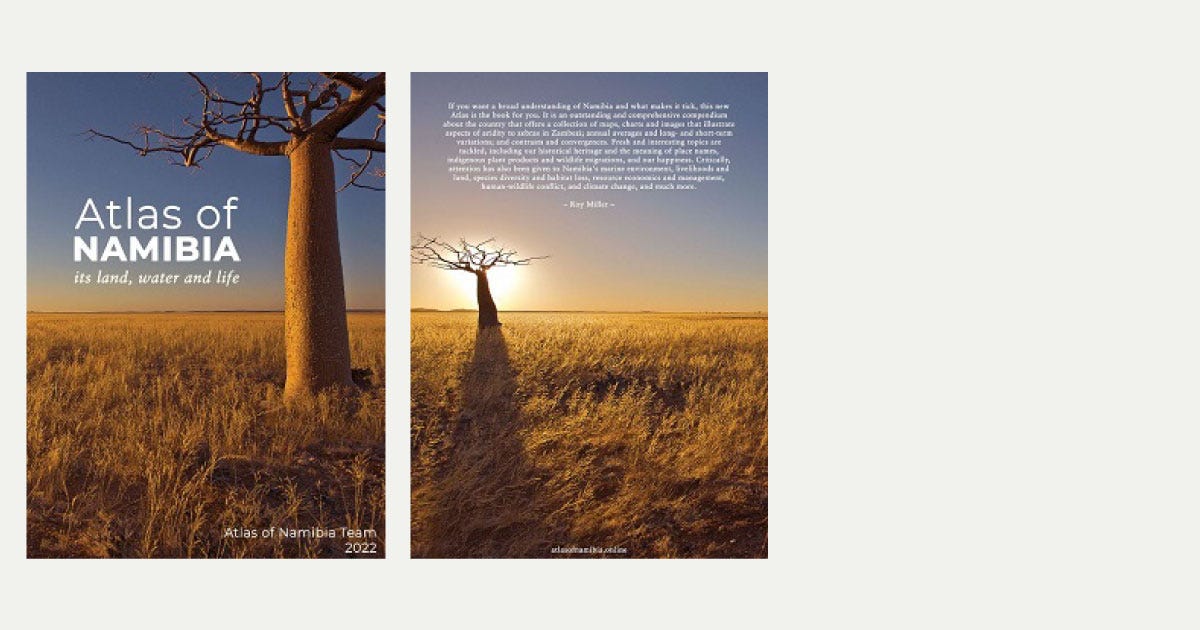
Until the next episode about Namibia, or until you head off on safari, familiarize yourself with the geology, fauna, and unique ecosystems of this fascinating country.
Next week we continue the Namibia episode and focus on the Himba people, who take pride in their unique aesthetic and in being some of the last nomadic pastoralists in southern Africa and the world.
Thanks for reading. Subscribe to get all stories in your inbox.